
No Products
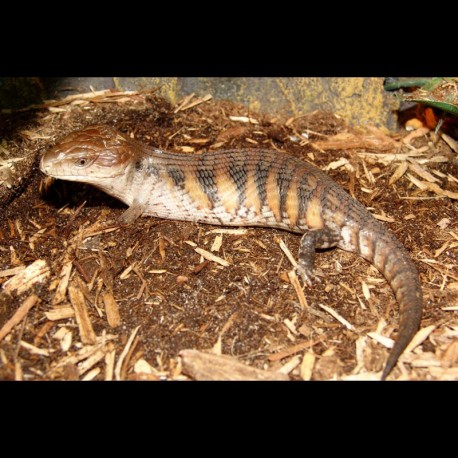 View larger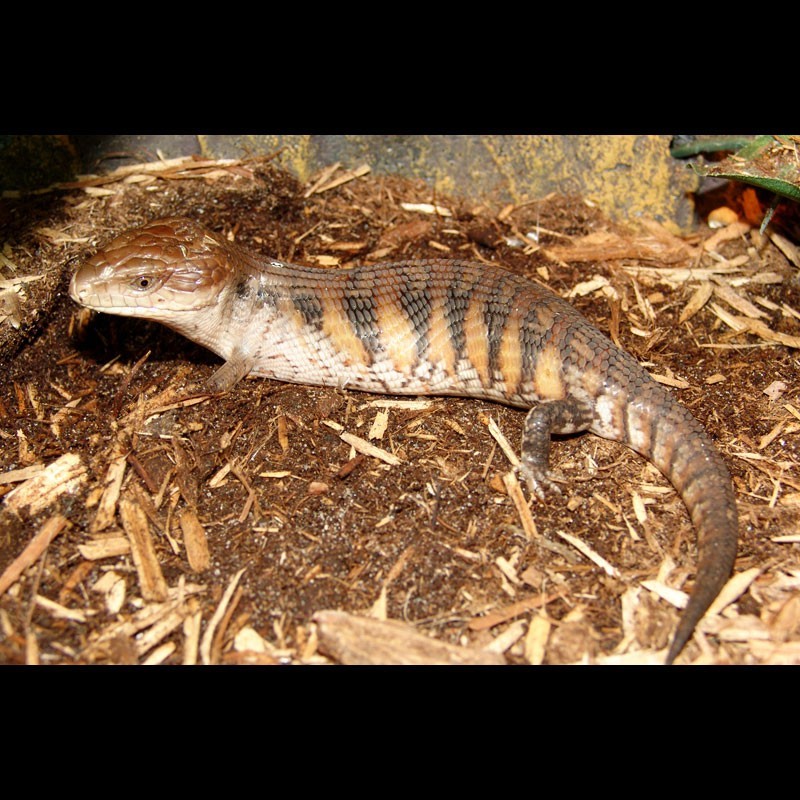
Blue Tongue Skinks - Northern (Babies)
Baby Northern Blue Tongue Skinks (Tiliqua scincoides intermedia)
This product is currently out of stock
More Info
Blue Tongue Skinks comprise the Australasian genus, Tiliqua, which contains some of the largest members of the skink family (Scincidae). They are commonly called Blue-tongued Lizards or simply Blue-tongues in Australia. As suggested by these common names, a prominent characteristic of the genus is a large blue tongue that can be bared as a bluff-warning to potential enemies.
Distribution
Blue Tongue Skinks are closely related to the genera Cyclodomorphus and Hemisphaeriodon. All species are found on mainland Australia with the exception of Tiliqua gigas which occurs in New Guinea and various islands of Indonesia. One subspecies of Tiliqua scincoides is also found on several small Indonesian islands between Australia and New Guinea. Tiliqua nigrolutea is the only species present in Tasmania. With the exception of the pygmy blue-tongue, they are relatively large lizards (up to 37 cm total length), light-bodied, short-limbed, broad with a distinct head and dull teeth.
Ecology
Most species are diurnal ground-foraging omnivores, feeding on a wide variety of insects, gastropods, flowers, fruits and berries. The pygmy blue-tongue is again the exception, being primarily an ambush predator of terrestrial arthropods. All are viviparous, with litter sizes ranging from 1-4 in the pygmy blue-tongue and shingleback to 5-24 in the eastern and northern blue-tongues.